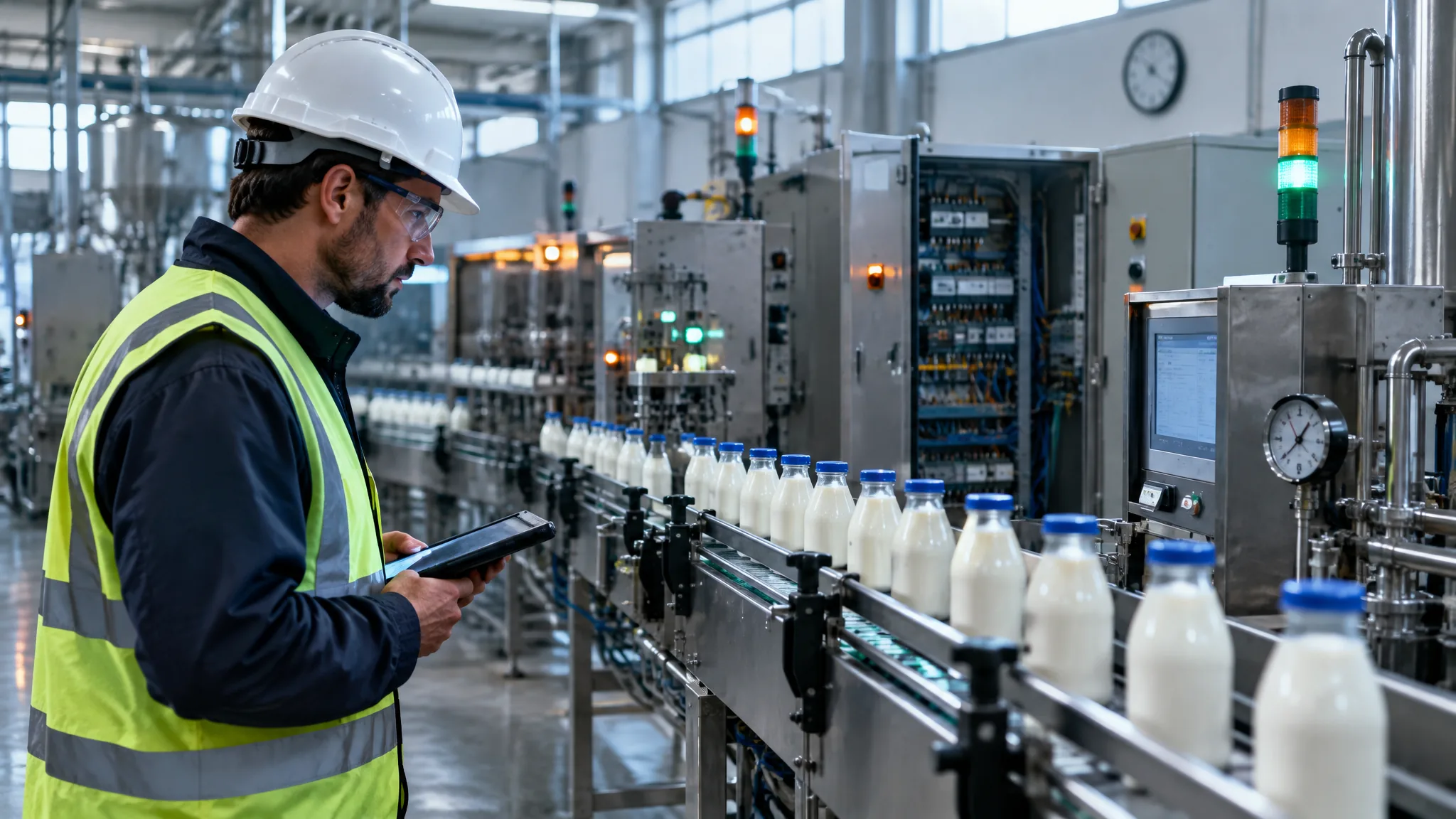
In mid-July 2026 Coca-Cola filed a current report with the SEC about a ransomware event at fairlife, the dairy company it owns. It filed under Item 8.01, "Other Events", and one sentence in the filing carries the whole operational story.
"However, as a result of the incident, production operations at fairlife in the United States are temporarily suspended."
From Coca-Cola's current report on Form 8-K, Item 8.01
Read it the way an analyst reads a filing and ask: who is this sentence an incident for? For fairlife, plainly. The filing says a third party reached "a portion of its systems, including its production-related systems". For the parent, it is an event at a company it owns, and the filing says it "promptly activated its incident response and business continuity protocols". For anyone who buys from fairlife, it is a supplier that has just stopped making product. Three organisations, one sentence, and the filing describes intruded systems at only one of them.
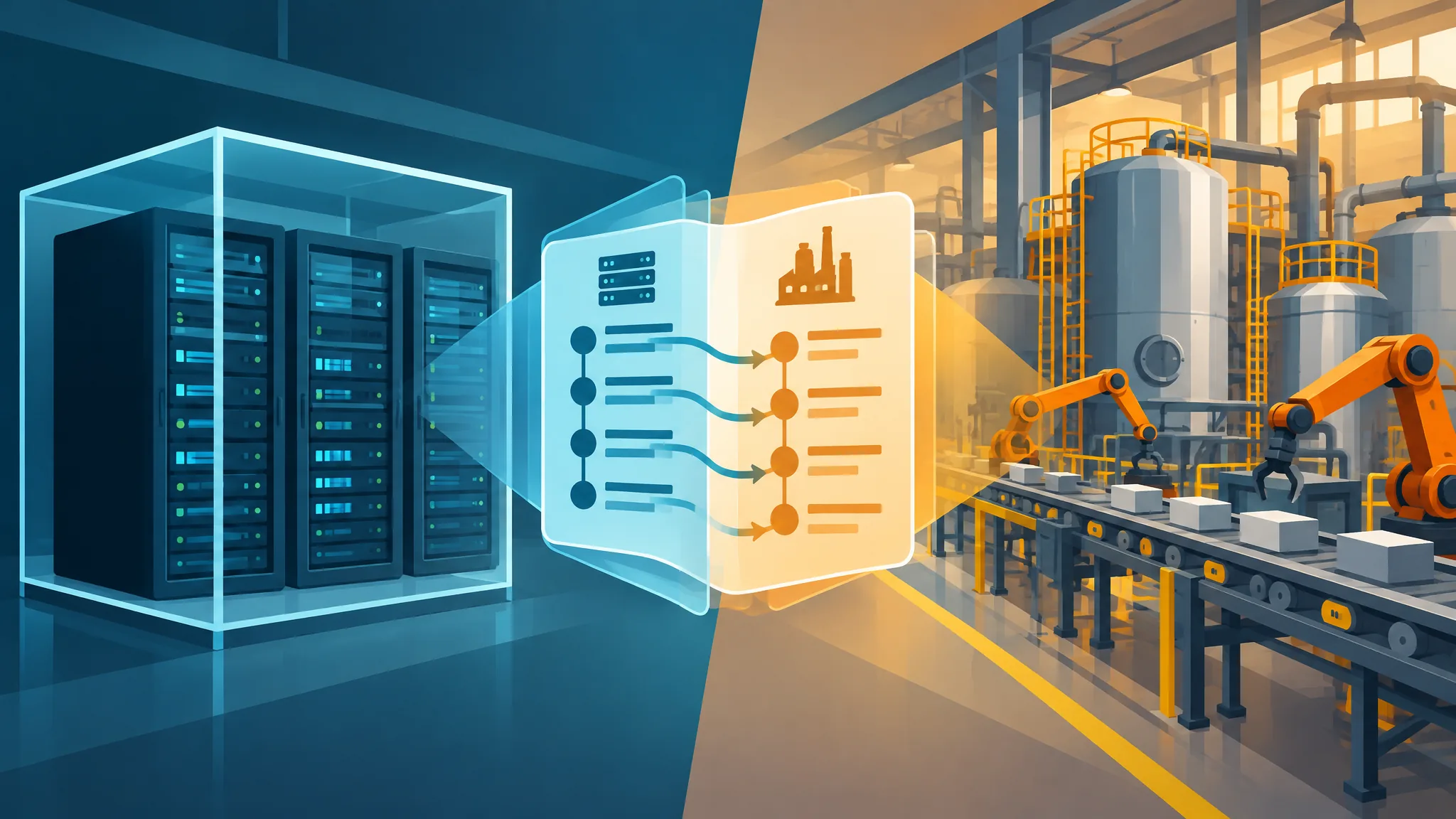
Now open your own plan at the definitions chapter. If its incident definition reads like "unauthorised access to or compromise of our control systems", it switches on for the first organisation and stays silent for the other two. This post is for whoever writes that chapter for an industrial site. If your plan already declares incidents at suppliers and shared services, skim to the clauses and check them against your own wording.
Production stops for three reasons that never touch a PLC
The second filing worth reading is West Pharmaceutical Services' Form 8-K under Item 1.05. West detected an intrusion on 4 May 2026 and responded by "proactively taking systems offline globally for containment purposes". On 7 May it determined the attack was material: data had been taken and systems encrypted. That was squarely West's own incident on the enterprise side. What happened on the plant floor is the interesting part. In its industrial ransomware analysis for the second quarter of 2026, Dragos describes West as "halting production without any control system compromise". A later amended filing reports the company fully operational, with no unauthorised activity observed since 5 May.
Put the two filings side by side and three separate routes to a stopped line appear, none of which needs an attacker inside a controller:
- A dependency is hit. A supplier, a toll manufacturer, a logistics provider or a sister company loses its systems, and the parts, data or service your process needs stop arriving.
- A shared service is hit. The enterprise systems the plant leans on (identity, virtual servers, the production order feed, remote access, backups) are encrypted or pulled offline, and the controllers are fine but cannot be run the normal way.
- You stop as a precaution. Nobody has proved anything is wrong in OT, and the site isolates or shuts down anyway, because not knowing is worse.
A plan that triggers only on compromise of your own control systems has nothing to say in any of the three. So the incident commander is chosen on the night, the severity is argued on the night, and nobody knows when to look again.
Clause 1 is where the time-to-harm figure earns its place, and the fairlife case shows why. Coca-Cola's 27 July update reported most production back at fairlife's four US facilities, and described retail availability as "largely unimpacted" because stores still had existing inventory to sell. Treat that as an illustration of the clause, not a claim about any buyer: a customer holding more stock than the outage lasted would log the event and monitor it, and clause 1 would never fire. A customer running lean on the same product would have crossed the line within days. Same supplier, same day, two different answers, and both correct.
Does your dependency register record how long each critical function lasts without each supplier? If not, clause 1 has nothing to compare against yet, and that column is the first gap to close.
"If it is not on our network, it is the supplier's problem."
"We are not going to pull the response team in every time a supplier gets ransomware. They handle their incident. We find another source."
Finding another source is a response, and somebody has to lead it, decide how long to wait, tell your own customers, and decide when to stop. Clause 1 does not send the cyber team into the supplier's network. It names who runs your side and on what timetable. And it fires only when the outage outlasts your buffer, so a supplier with three weeks of your stock sitting in the warehouse produces a log entry and a check-in date, not a call-out. The trigger is narrow on purpose: it follows your consequence, not their headline.
There is also the reverse duty. If your site is someone else's supplier, your incident is their clause 1. The plan should already say who tells which customers, and by when, because they cannot run their trigger without hearing from you.
"I cannot see inside my suppliers' systems. How do I write a trigger about them?"
"I do not know what software my chemical supplier runs. I do not even know who their IT person is. How am I supposed to write a trigger about their network?"
You never write about their network. Every word in clauses 1 and 4 is about your side: which of your functions depends on them, how long you last without them, and who on your staff hears first. Visibility into their systems is not needed. A reliable route for the news is.
The news rarely arrives at the security team. It arrives as a missed delivery, a call to the buyer, an email to an account manager, or a headline. That is why clause 4 names procurement and logistics outright. Ask the person who places your biggest orders one question: "If this supplier phoned tonight to say they had stopped, who would you tell?" Whatever they answer is your real escalation path today. Compare it with the plan's.
"Leadership will never let us call a precautionary shutdown an incident."
"The moment the word incident is on paper, people start asking about breaches, insurers and regulators. If we stopped as a precaution, our managers want it called maintenance."
Clause 3 declares an incident inside your own plan. It is the switch that puts a named person in charge, starts the log and sets a reassessment time. It is not a public statement, and it decides nothing about disclosure. Whether anything is reported outside the company is a separate decision, made by the roles your plan gives that authority to, with counsel. Keeping the two apart is what makes clause 3 acceptable: leadership is being asked to approve a way of running a stopped plant, not a press release.
The cost of calling it maintenance is that nobody owns it. A stop with no incident lead has no reassessment time and no stand-down rule, and often no record of why the decision was made, which is the record you will want most if the stop turns out to have been right.
The line worth underlining
Go back to the 8-K. One sentence about a suspended production line was an incident for a subsidiary, an event for its parent, and a supply problem for everyone downstream. West's plants stopped with no control system compromised. In both cases the question a plan has to answer was never "where was the attacker?" It was "what has stopped working for us, and how long can we last?"
Write the triggers around that question and the definitions chapter switches on for the incidents that actually stop plants, including the ones that happen somewhere else.
Sources: Coca-Cola current report (Item 8.01), filed July 2026 | The Coca-Cola Company, fairlife restoration update, 27 July 2026 | West Pharmaceutical Services, Form 8-K, May 2026 | West Pharmaceutical Services, Form 8-K/A | Dragos, Industrial Ransomware Analysis Q2 2026