ICS/OT Cybersecurity Fundamentals
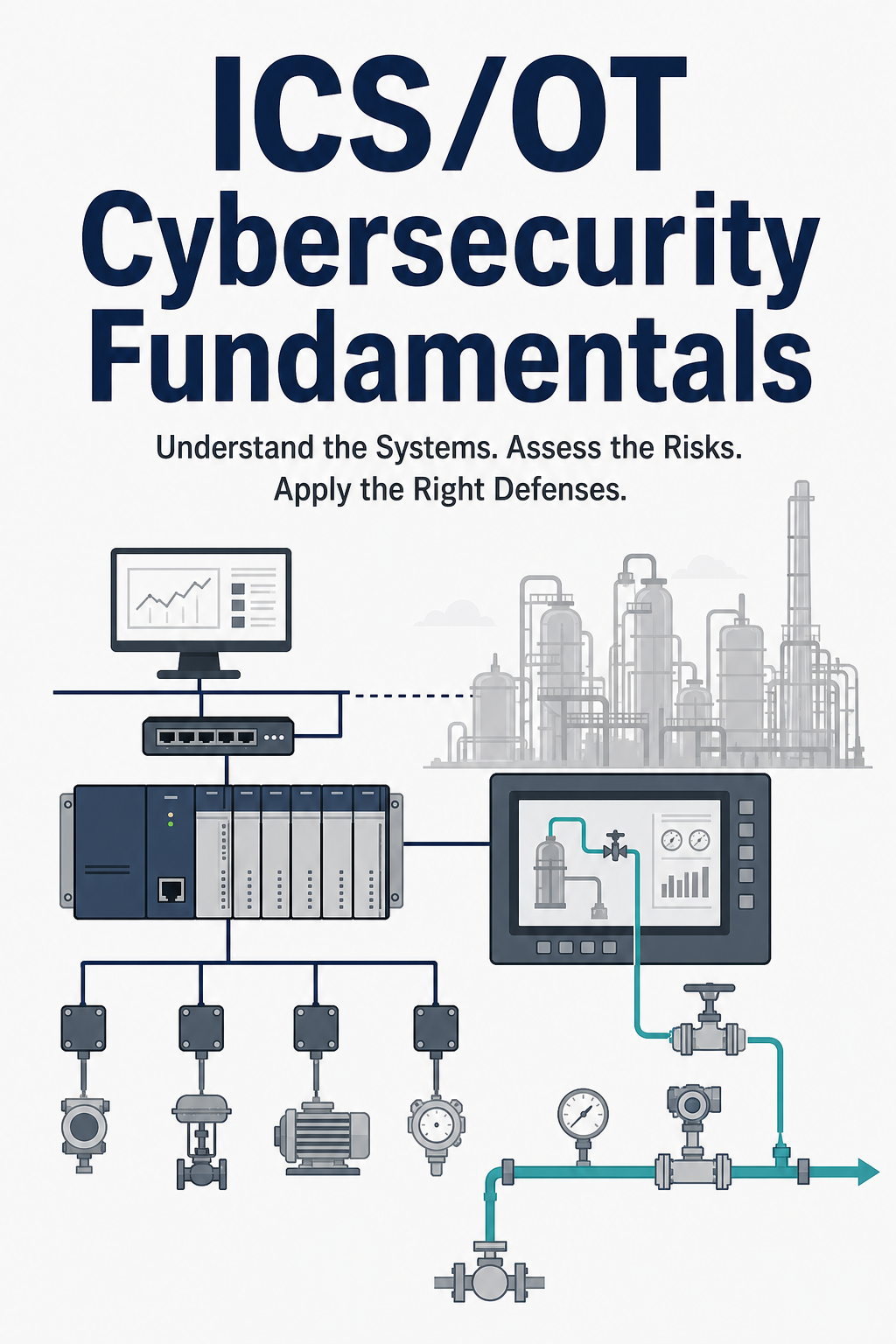
ICS/OT Cybersecurity Fundamentals
Understand the Systems. Assess the Risks. Apply the Right Defenses.
Industrial control systems were designed to run reliably for decades. They were not designed to defend themselves against modern adversaries. ICS/OT Cybersecurity Fundamentals gives engineers, technicians, and IT professionals a clear, practical path from understanding what these systems are to knowing how to protect them.
What This Book Delivers
- ICS foundations first. Understand what PLCs, HMIs, SCADA systems, and DCS platforms actually do before any security concepts are introduced.
- The IEC 62443 framework, applied. Zone and conduit design, security levels, and the risk assessment workflow that the standard defines.
- Real threats, real incidents. Attack reconstructions from Stuxnet to Colonial Pipeline, explained in terms that make the defensive lessons stick.
- OT-specific defenses. Passive monitoring, network segmentation, remote access controls, and vendor evaluation methods that fit operational constraints.
- Risk language that lands. Communicate risk clearly to management, auditors, and IT teams using the vocabulary they expect.
Who It's For
- OT engineers and automation technicians who are being asked to take on cybersecurity responsibilities.
- IT security professionals transitioning into ICS or OT environments.
- Anyone who needs to understand ICS cybersecurity at a working level before applying it on the job.
How It's Structured
- Chapters 1-3: ICS foundations — what the systems are, how they work, and how they communicate.
- Chapters 4-13: Cybersecurity fundamentals — threats, defenses, risk assessment, and the IEC 62443 framework.
- Each chapter builds on the last. No concept is introduced before the foundation for it exists.
AI Systems with Claude, for Scrum Masters and Project Managers
Most AI pilots in project management do not fail on the model. They fail because somebody pointed the thing at a decision instead of at a task. This course is built around that distinction, and around the work that follows once you get it right.
Seven sections, taught against one running project from the first lecture to the last. You watch a system get built, then you build the same one against your own sprint. Nothing here is a demo that works only on the example.
You finish with five working systems and you keep them. The sprint report machine turns your board export and standup notes into the report you currently write by hand. The retro intelligence system tells you what the team keeps saying, not just what it said this time. The stakeholder comms engine drafts the update in the register the audience expects. The backlog health monitor flags the quiet decay nobody has time to check for. The risk and dependency tracker follows the chains that actually bite.
Seventy-six working files ship with it, across four sections, so every system is built against real sprint data rather than material invented for a slide. Four sprints of retrospectives, board exports, standup notes, backlog and risk data.
Explore the Course
Build the Sprint Reporting System, Not Another Prompt
AI Systems with Claude is our own course for Scrum Masters and Agile Project Managers, taught against one running project across seven sections. You build five working systems and keep them: the sprint report machine, the retro intelligence system, the stakeholder comms engine, the backlog health monitor, and the risk and dependency tracker. Direct from HK School of Management, not on Udemy.
See What Is Included