
Contract

A legally binding agreement in which the seller is required to deliver the agreed product, service, or result, and the buyer is required to provide payment.

Key Points

  • Creates enforceable obligations for both buyer and seller.
  • Defines scope, deliverables, price, schedule, and terms and conditions.
  • Changes typically require formal change control and mutual agreement.
  • Common types include fixed-price, cost-reimbursable, and time-and-materials.

Example

A company hires a vendor under a time-and-materials contract at USD 120/hour, not to exceed USD 150,000, to configure an ERP module. The vendor provides qualified consultants and invoices monthly based on approved timesheets, while any scope additions require a signed change order.

PMP Example Question

Which statement best describes a contract in a project context?

  1. An internal document that lists the project's cost baselines.
  2. A legal agreement where the seller must deliver defined work and the buyer must provide payment.
  3. A risk response plan created by the procurement department.
  4. A nonbinding memorandum used to explore potential partnerships.

Correct Answer: B — A legal agreement where the seller delivers defined work and the buyer pays for it

Explanation: A contract creates enforceable obligations for delivery and payment, unlike internal plans or nonbinding documents.
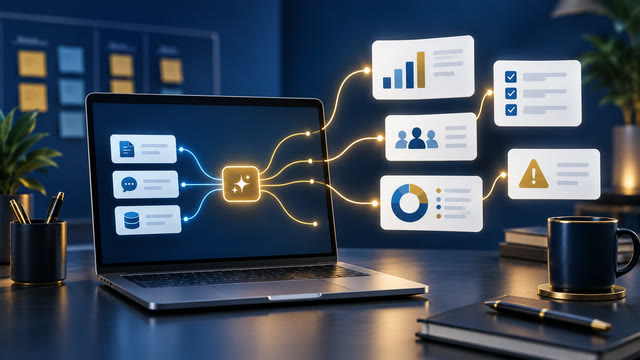
AI Systems with Claude, for Scrum Masters and Project Managers

Most AI pilots in project management do not fail on the model. They fail because somebody pointed the thing at a decision instead of at a task. This course is built around that distinction, and around the work that follows once you get it right.

Seven sections, taught against one running project from the first lecture to the last. You watch a system get built, then you build the same one against your own sprint. Nothing here is a demo that works only on the example.

You finish with five working systems and you keep them. The sprint report machine turns your board export and standup notes into the report you currently write by hand. The retro intelligence system tells you what the team keeps saying, not just what it said this time. The stakeholder comms engine drafts the update in the register the audience expects. The backlog health monitor flags the quiet decay nobody has time to check for. The risk and dependency tracker follows the chains that actually bite.

Seventy-six working files ship with it, across four sections, so every system is built against real sprint data rather than material invented for a slide. Four sprints of retrospectives, board exports, standup notes, backlog and risk data.

Explore the Course


Become an AI-First Agile Leader!

HK School of Management helps you apply AI to Agile work with practical, prompt-based workflows for real-world Scrum challenges. Practical skills, tools, and guidance you can apply right away. Covered by Udemy's 30-day refund policy.

Learn More