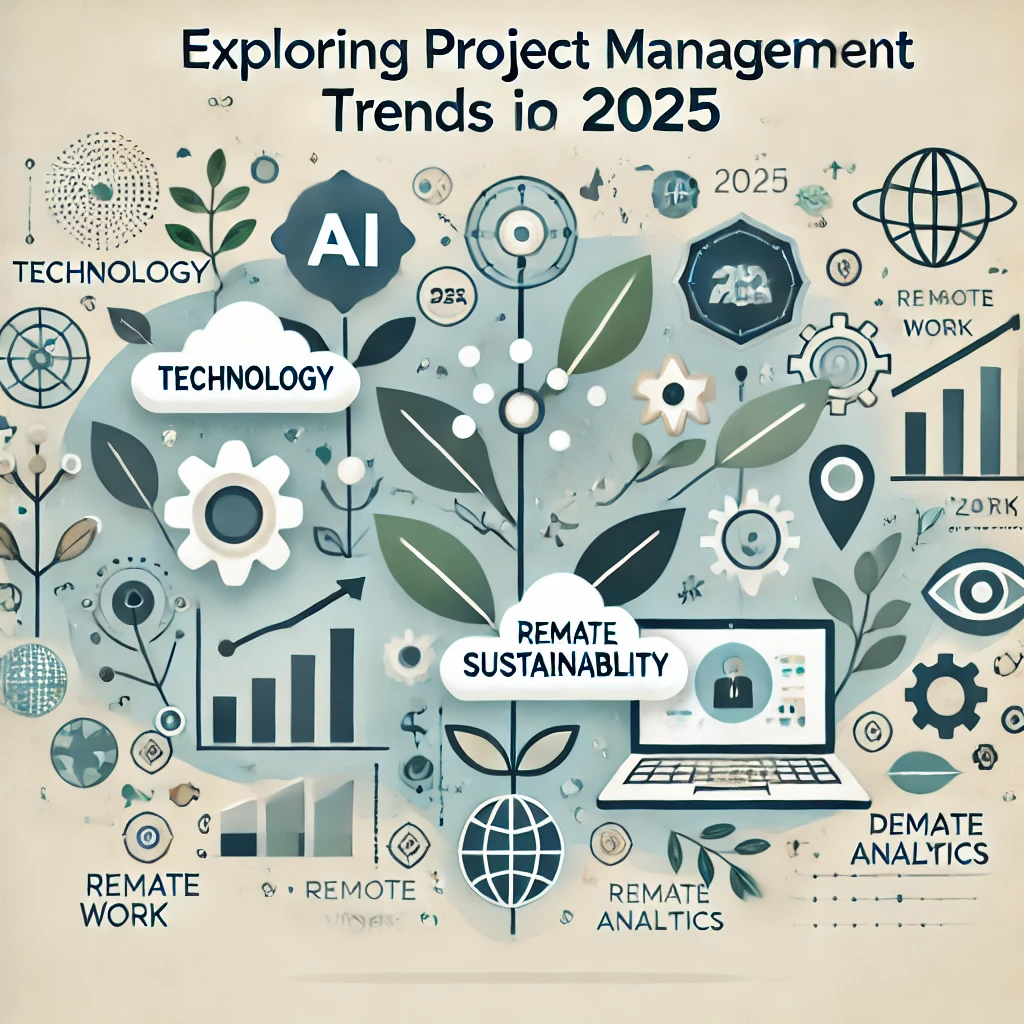
In an era where projects drive strategic change, staying current with project management trends isn’t optional—it’s essential. 2025 is bringing rapid technological advances, evolving workforce dynamics, and higher stakeholder expectations. Below you’ll find data-driven insights, expert guidance, case studies, and emerging tools that paint a clear picture of where the profession is headed. HKSM isn’t just keeping up with these trends; our training programmes are designed to make you a proactive leader in this new landscape.
- Market Growth and Adoption: Project Management Is Mission-Critical
• Explosive software growth. The project-management software market is estimated at around $7.24B in 2025 and projected to reach roughly $12.02B by 2030, near 10–11% CAGR.
• Tool usage is mainstream. About 8 in 10 companies now use work-management platforms, and a majority of employees say they use more tools than last year.
• Talent demand and salaries. A global shortfall of project managers is expected over the coming decade. In 2025, median total pay for U.S. PMs is around $136,000, and certifications typically boost earnings.
• Training gaps remain. Fewer than half of organizations provide accredited PM training, while most leaders say teams need stronger PM skills. HKSM courses are built to close this gap.
- Artificial Intelligence & Automation: From Buzzword to Advantage
2.1 Rising adoption and perceptions
• Market momentum. AI in project management is growing at double-digit rates, moving rapidly from pilot to production.
• On-the-ground usage. Roughly one in five project professionals already use AI often or always. Most senior leaders expect AI to materially reshape delivery within five years.
• Generational patterns. Adoption varies across generations; many expect AI to enhance performance, while a notable minority still worry about job displacement.
2.2 How AI-powered tools add value
• Predictive analytics and risk forecasting. Models surface schedule and budget risks early, enabling proactive action instead of reactive firefighting.
• Resource load balancing. Algorithms highlight overload and under-utilization, recommending reallocations to reduce bottlenecks and burnout.
• Contextual dashboards and scenario planning. Executive-ready views roll up the right metrics, while “what-if” simulations guide decisions under uncertainty.
• Natural-language interfaces. Chat and voice inputs reduce manual entry, speed up task capture, and make insights easier to access.
2.3 Expert guidance
• Start with the right tasks. Target scheduling, data analysis, and risk assessment for early AI wins, then scale thoughtfully.
• Elevate human strengths. As AI handles routine work, lean into stakeholder engagement, strategic risk management, and change leadership.
• Know AI’s limits. Build literacy around data quality, model behavior, and ethical use to avoid blind spots.
- Hybrid and Agile-Inspired Methods: Flexibility Is the Default
• Hybrid is mainstream. Many teams blend waterfall planning with Agile execution, adopting stand-ups, demos, and retros in non-software contexts.
• Integration over fragmentation. Low-code and no-code solutions are rising, but the real gains come from integrating PM, resource, CRM, and finance data.
• Managing distributed work. Remote and hybrid teams require explicit norms, deliberate communication, and thoughtful rituals to maintain cohesion.
• Well-being as a metric. Sustainable workloads, clear priorities, and healthy boundaries prevent burnout and protect outcomes.
- Decision-Making: Data Literacy + Human Skills
• Analytics as a core competency. Leaders use forecasting to anticipate delays, resource constraints, and overruns—and to test mitigation scenarios before committing.
• Soft (power) skills matter more. Communication, facilitation, relationship-building, and strategic thinking amplify the impact of tools and dashboards.
• Digital and adaptive skills. Fluency in data, compliance, and security—plus the ability to pivot quickly—is now a baseline expectation for PMs.
- Case Studies: What Works in the Real World
• Consulting firm transformation. Moving from spreadsheets to a unified delivery platform boosted project-manager utilization by roughly 15%, improved company-wide utilization, and cut resource-allocation work from hours to minutes.
• Healthcare product delivery. A disciplined, hybrid approach clarified priorities, increased user satisfaction, and improved transparency and trust between teams and stakeholders.
• Crisis response in infrastructure. Structured scope, WBS, and scheduling enabled a major roadway to reopen to commercial traffic in barely over a month after severe flooding, demonstrating the power of robust PM fundamentals during emergencies.
- Emerging Tools & Features to Watch
• Predictive analytics and risk forecasting: flags likely schedule and budget risks early to enable proactive planning.
• AI-driven resource balancing: forecasts bottlenecks, recommends reallocations, and helps teams avoid burnout—especially in hybrid environments.
• Contextual dashboards: translate raw data into executive-ready insights (variance, milestone risk, utilization trends) without manual wrangling.
• Scenario planning and forecasting: model multiple paths, test assumptions, and choose resilient options quickly.
• Natural-language interfaces: capture tasks and retrieve insights via chat or voice to reduce friction and speed up decisions.
- What These Trends Mean for You—and How HKSM Can Help
• Project management is now strategic, tech-enabled, and human-centered.
• The mass adoption of PM software and the widening talent gap underscore one reality: practitioners who upskill quickly will be in high demand.
• AI is an amplifier, not a threat. It takes on repetitive tasks and surfaces insights, freeing PMs to focus on stakeholders, strategy, and team well-being.
• Hybrid delivery and remote work demand flexibility. Tailor process to context, and cultivate communication skills that work across cultures and time zones.
• Data literacy and soft skills are the foundation. Mastery of tools is meaningless without the ability to interpret information and lead people.
How We Support Your Growth
• Project Management Fundamentals. Build a strong foundation and help earn credentials linked to higher salaries.
• Agile, Hybrid, and Leadership: Learn to combine waterfall and Agile effectively, with real-world examples that show how principles translate into outcomes.
• AI for Project Managers: Understand capabilities and limits, analytics and resource balancing, and learn to ask better questions.
• Leadership and Soft-Skills Development: Advance communication, emotional intelligence, and adaptability—the skills that consistently drive project success.
Ready to Lead the Future?
If you’re serious about staying ahead of the curve and positioning yourself as a leader in 2025 and beyond, HKSMNOW.COM is your partner. Our courses are designed by practitioners and grounded in current best practices. Explore our project-management programmes today and start your journey toward mastery. Don’t just follow the trends—shape the future of project delivery.