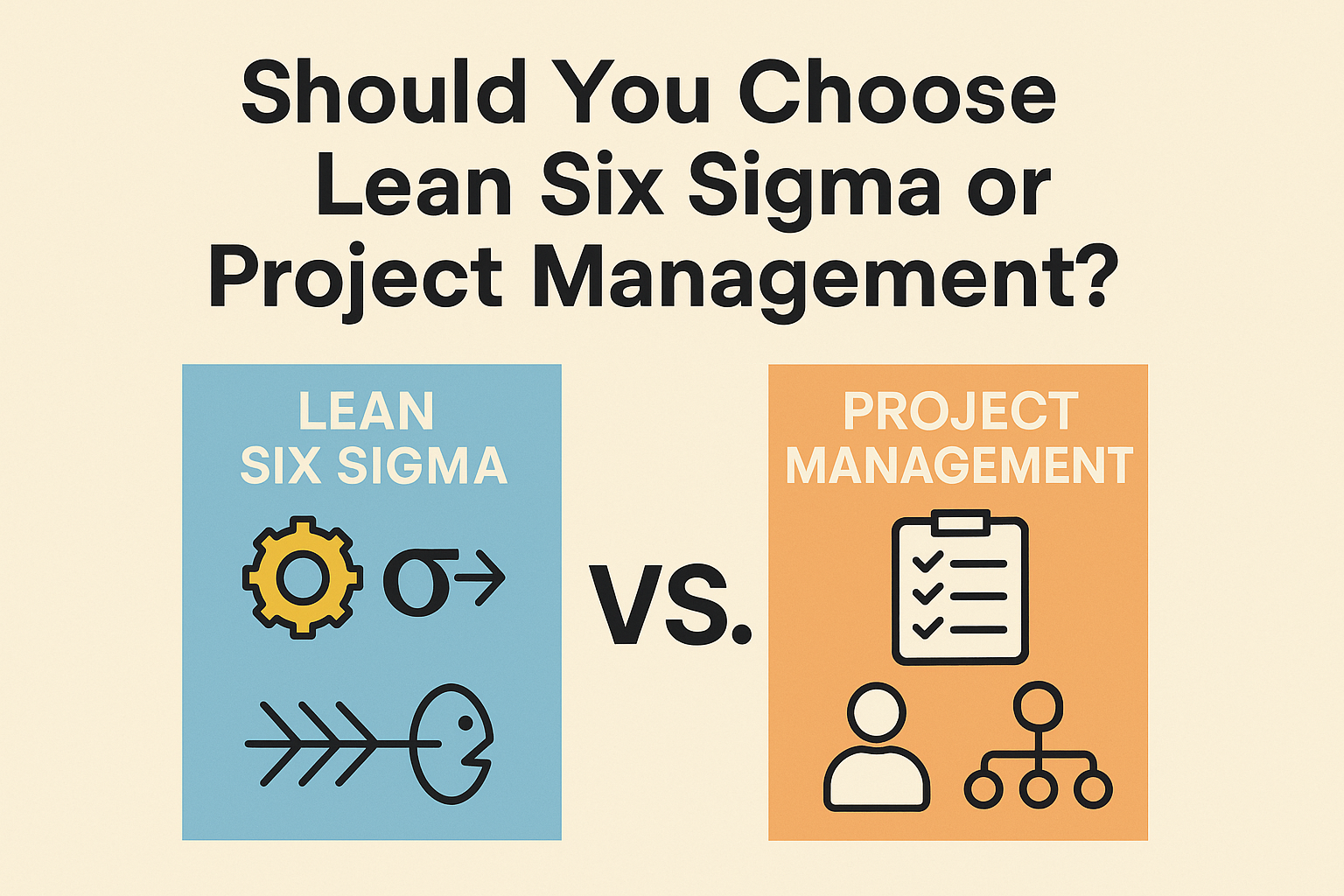
Lean Six Sigma is useful when work is slower, less predictable, or more error-prone than it should be. It combines two complementary perspectives: improve the flow of value and reduce the variation that makes outcomes unreliable.
Lean asks where time and effort are being wasted
Lean examines how work moves from a request to a completed result. It looks for delays, unnecessary movement, excess inventory, repeated handoffs, rework, overprocessing, and work that customers do not value.
The objective is not simply to make people work faster. It is to design a process in which valuable work moves with fewer interruptions and fewer unnecessary steps.
Six Sigma asks why results vary
Two teams can follow what appears to be the same process and still produce different cycle times, defect rates, or customer experiences. Six Sigma uses data to understand that variation and identify the factors that materially influence performance.
DMAIC provides a disciplined improvement path
Existing processes are commonly improved through DMAIC:
- Define: clarify the problem, customer need, scope, and intended result.
- Measure: understand current performance and confirm that the data can be trusted.
- Analyze: identify and verify the causes driving the problem.
- Improve: design, test, and implement changes that address verified causes.
- Control: monitor the improved process and respond before performance declines.
A practical example
Suppose customer applications take between two and twelve days to approve. A team might initially conclude that employees need to work faster. Lean Six Sigma encourages better questions.
- Where do applications wait?
- Which information is frequently missing?
- How many handoffs and approvals are required?
- Do different reviewers apply different rules?
- Which application characteristics predict delay or rework?
The eventual solution could involve a clearer intake form, fewer approval steps, standardized review criteria, workload balancing, or automation. The method prevents the team from committing to a preferred solution before understanding the process.
Choose an appropriate first problem
A good improvement project has a meaningful performance gap, a process that can be observed, accessible data, and an owner who can implement change. Avoid problems so broad that the team cannot define a boundary or so political that evidence will not influence the decision.
| Promising starting point | Warning sign |
|---|---|
| Repeated customer complaints about one process | A vague goal to “improve the whole organization” |
| High rework, defects, or processing delays | No reliable way to observe or measure the work |
| A process owner willing to test changes | A predetermined solution that cannot be questioned |
The practical value
Lean Six Sigma gives teams a shared way to define problems, use evidence, test assumptions, and sustain results. Its value is not in producing more charts or adding specialist terminology. Its value is helping people make better changes to real work.