
Virtual Teams

Teams whose members pursue a common goal and perform their responsibilities with little or no in-person interaction, collaborating mainly through digital channels.

Key Points

  • Members are geographically dispersed and rely on tools like video conferencing, chat, and project software.
  • Clear communication rules, availability windows, and response expectations are essential.
  • Success depends on defined roles, documented processes, and outcome-based performance measures.
  • Account for time zones, culture, and language differences; plan intentional team-building.

Example

A global project has a PM in the US, developers in India, and QA in Poland. They rarely meet in person, coordinate via weekly video calls, and track work in Jira and Slack. Despite distance, they deliver features on schedule using clear protocols and shared dashboards.

PMP Example Question

A project manager leads contributors in multiple countries who seldom meet face to face and collaborate primarily through online platforms. What type of team is this?

  1. Co-located team
  2. Virtual team
  3. Balanced matrix
  4. Functional organization

Correct Answer: B — Virtual team

Explanation: A virtual team works toward shared objectives with minimal or no in-person interaction, using digital tools to coordinate work.
Advanced Project Management — Measuring Project Performance

Move beyond guesswork and status reporting. This course helps you measure real progress, spot problems early, and make confident decisions using proven project performance techniques. If you manage complex projects and want clearer visibility and control, this course is built for you.

This is not abstract theory. You’ll work step by step through Earned Value Management (EVM), learning how cost, schedule, and scope come together to show true performance. You’ll build a solid foundation in EVM concepts, understand why formulas work, and learn how performance data actually supports leadership decisions.

You’ll master Work Breakdown Structures (WBS), control accounts, and budget baselines, then apply core EVM metrics like EAC, TCPI, and variance analysis. Through a detailed real-world example, you’ll forecast outcomes, analyze trends, and understand contingencies and management reserves with confidence.

Learn how experienced project managers monitor performance, communicate results clearly, and take corrective action before projects slip. With practical exercises and hands-on analysis, you’ll be ready to apply EVM immediately. Enroll now and start managing performance with clarity and control.


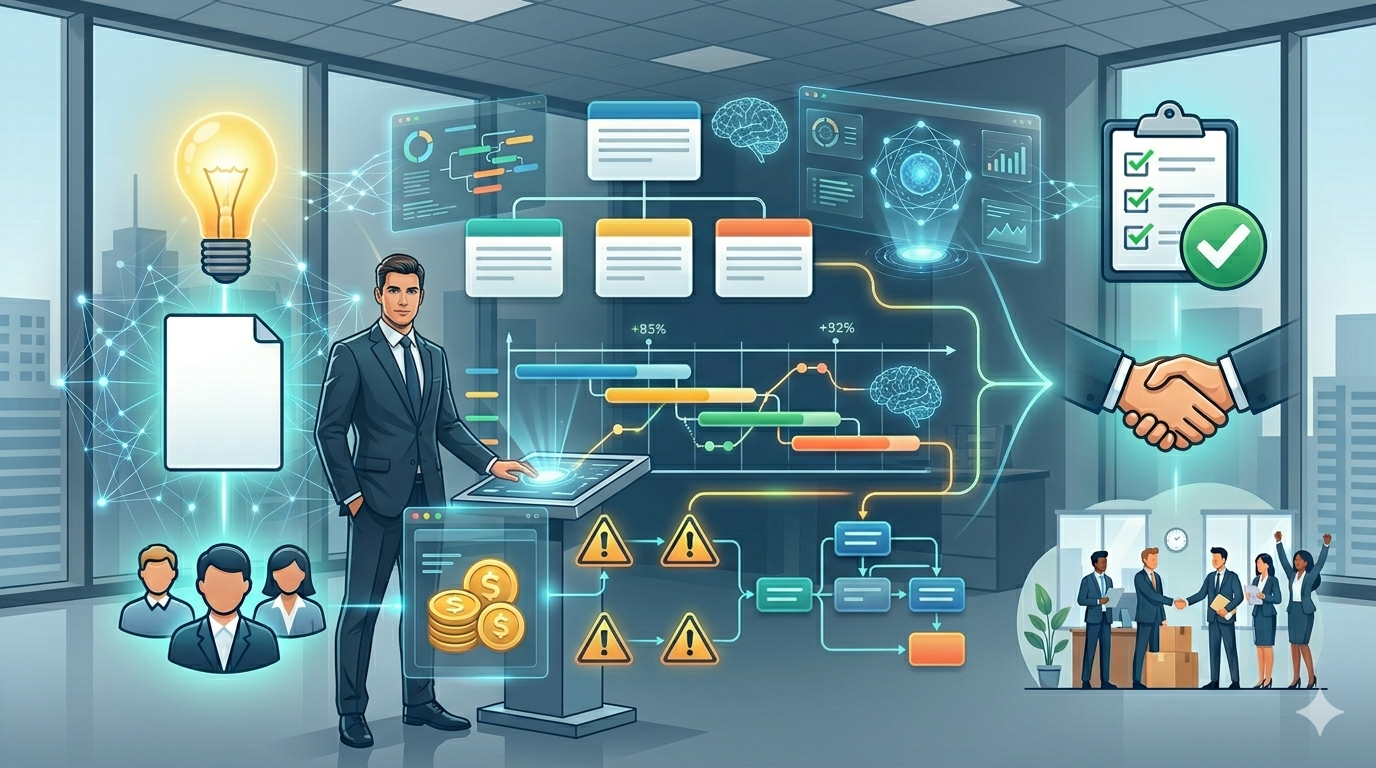
Build complete project plans in minutes with AI

Stop spending hours on documentation. Learn how to use AI to create charters, WBS, schedules, risk registers, and executive reports faster—while staying fully in control. This course gives you ready-to-use prompt templates and practical workflows based on real project work. No guesswork, no fluff—just tools you can apply immediately. Backed by Udemy’s 30-day money-back guarantee, so you can start risk-free.

Learn More