
Hoshin Kanri

A structured approach for deploying strategy and policy across the organization by cascading top-level goals into aligned plans, actions, and measurable outcomes.

Key Points

  • Aligns strategic priorities from executives to portfolios, programs, and teams.
  • Translates high-level objectives into cascading goals, initiatives, and metrics.
  • Uses iterative review (PDCA) to learn, adjust, and sustain focus.
  • Promotes two-way dialogue (catchball) to balance ambition with capacity.

Example

A company sets a goal to cut time-to-market by 20% in 12 months. Leadership defines breakthrough objectives, the portfolio selects enabling epics, product areas set quarterly OKRs, and teams plan increments that map to those goals. Monthly Hoshin reviews track lead time, flow efficiency, and delivery predictability, prompting adjustments to WIP limits and backlog priorities.

PMP Example Question

Which statement best describes Hoshin Kanri in an agile organization?

  1. A technique for estimating user stories using relative sizing.
  2. A method for deploying strategy by cascading objectives and using PDCA to align work.
  3. A qualitative risk analysis tool for ranking threats and opportunities.
  4. A performance measure that integrates cost and schedule variance.

Correct Answer: B — A method for deploying strategy by cascading objectives and aligning execution

Explanation: Hoshin Kanri focuses on translating top-level strategy into coordinated objectives, initiatives, and measures across all levels, with iterative review and adaptation.
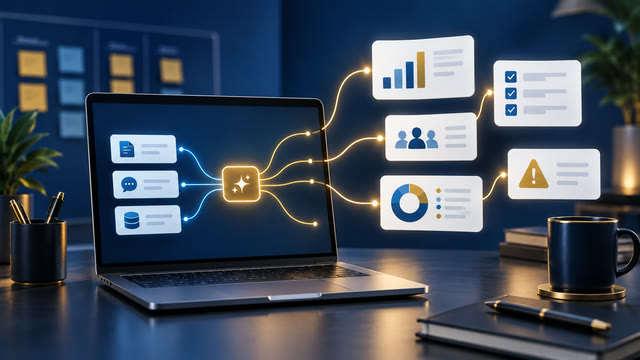
AI Systems with Claude, for Scrum Masters and Project Managers

Most AI pilots in project management do not fail on the model. They fail because somebody pointed the thing at a decision instead of at a task. This course is built around that distinction, and around the work that follows once you get it right.

Seven sections, taught against one running project from the first lecture to the last. You watch a system get built, then you build the same one against your own sprint. Nothing here is a demo that works only on the example.

You finish with five working systems and you keep them. The sprint report machine turns your board export and standup notes into the report you currently write by hand. The retro intelligence system tells you what the team keeps saying, not just what it said this time. The stakeholder comms engine drafts the update in the register the audience expects. The backlog health monitor flags the quiet decay nobody has time to check for. The risk and dependency tracker follows the chains that actually bite.

Seventy-six working files ship with it, across four sections, so every system is built against real sprint data rather than material invented for a slide. Four sprints of retrospectives, board exports, standup notes, backlog and risk data.

Explore the Course


Build complete project plans in minutes with AI

Learn how to use AI to create charters, WBSs, schedules, risk registers, and executive reports while staying in control. This course gives you prompt templates and practical workflows based on real project work. Practical skills, tools, and guidance you can apply right away. Covered by Udemy's 30-day refund policy.

Learn More